How we work: Bali Private Luxury is an independent curation & concierge desk — not the villas, resorts, or operators themselves. Prices are indicative ranges (last verified mid-2026) and vary by property, season, and inclusions; availability, weather, and wildlife are never guaranteed. No one can pay to change what we publish; if you proceed with a vetted partner we introduce, they may pay us a referral fee at no extra cost to you.
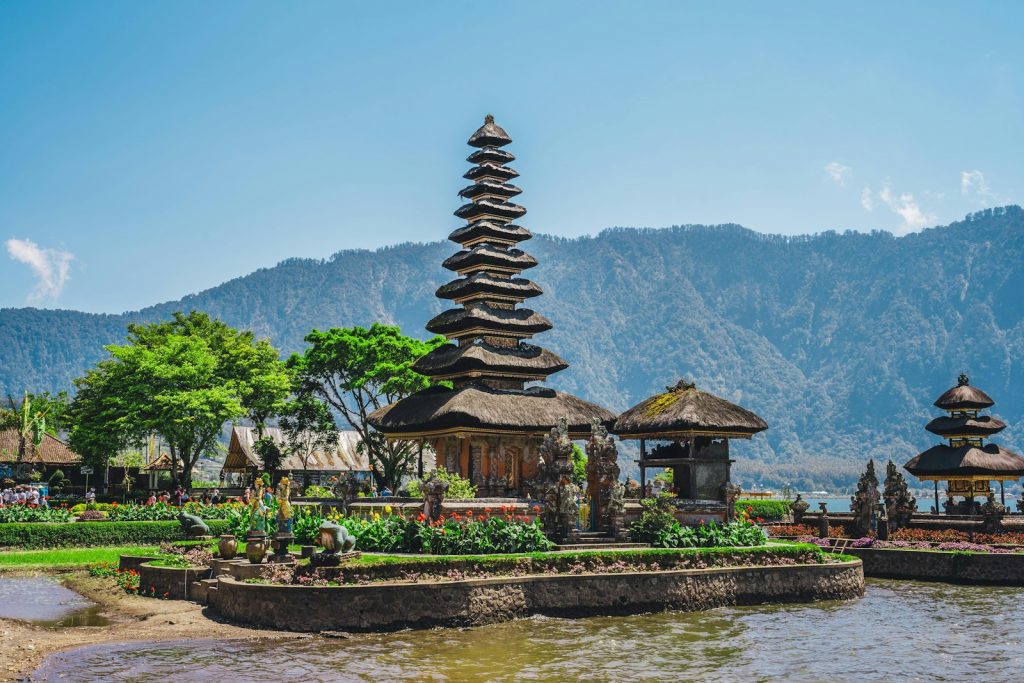
A private temple tour Bali is a fully tailored day (or series of days) visiting Balinese temples with a private car, driver and guide, timed to avoid the heaviest crowds and calibrated to your comfort level with rituals and dress. In practice it usually combines two to four temples, a temple blessing, scenic stops and a long lunch, run at your pace rather than a group schedule.
What a Private Temple Tour in Bali Actually Is
Group “temple circuits” in Bali tend to chase a checklist: five or six sites in a day, the same photo stops, the same traffic. A private cultural tour Bali is different in three ways:
- Everything is private: vehicle, driver, licensed guide, and (if requested) your own local priest for a temple blessing.
- Timing is strategic: sunrise or late-afternoon entries, reverse-flow routes, and secondary access gates where possible.
- Depth over volume: fewer temples, more context, and time to sit quietly when you want it.
For high–net worth and privacy-focused travellers, that usually means:
- Pick‑up direct from villa or resort, with cold towels and refreshments.
- Sarongs, sashes and temple-appropriate dress prepared in advance.
- Pre-checked opening hours, ceremony days and traffic patterns.
- Option to add security, medical support or a second vehicle for staff and nannies.
Core Elements of a Private Temple Day
Every itinerary is custom, but most private temple tour Bali days share the same building blocks.
1. Private Car, Driver and Licensed Guide
For quiet luxury travel here, the baseline is a late-model SUV or executive MPV with strong air-conditioning and bottled water. English-speaking drivers are standard; for detailed cultural interpretation, we add a licensed local guide.
- Vehicle & driver (8–10 hours): typically IDR 1.2–2.5 million per day for a comfortable private car with fuel, last verified June 2026.
- Licensed guide: usually adds IDR 700,000–1.5 million per day depending on language and experience, last verified June 2026.
For families, couples on honeymoon, or small groups of friends, this is usually one vehicle. For VIPs or public figures, we often split guests and staff/security across two cars.
2. Temple Selection That Fits Your Base
Bali looks compact on a map. It is not. Traffic and narrow village roads mean you are usually choosing between regions, not “all the highlights in a day”.
Here is a snapshot of typical temple areas paired with where you stay:
| Base Area | Typical Temple Focus | Approx. One-Way Drive Time* | Why Choose This |
|---|---|---|---|
| Ubud / Central Bali | Tirta Empul, Gunung Kawi, Goa Gajah, local village temples | 30–60 minutes | Strongest for temple blessing Bali private options, rice terraces, softer drives. |
| Jimbaran / Uluwatu / Nusa Dua | Uluwatu Temple, cliff shrines, coastal temples | 15–60 minutes | Combine temples with half-day beach or spa; simpler with young children. |
| Canggu / Seminyak / Kerobokan | Tanah Lot, Taman Ayun, inland shrines | 45–90 minutes | Access to both coast and central temples; good for first-timers. |
| North Bali (Lovina / Pemuteran) | Ulun Danu Bratan, Brahma Vihara Arama, local temples | 30–90 minutes | Cooler climate, lakes and mountains, fewer large tour buses. |
*Drive times from your villa or resort; traffic and ceremony days can extend these.
We typically suggest two main temples plus one lighter stop (a small village temple or rice terraces) per full day, not more.
3. Crowd-Avoiding Strategy
Bali’s most photogenic sites attract volume. Avoiding that is part timing, part routing, part compromise.
Typical approaches we use:
- Reverse the flow: Many coaches reach major temples late morning. We often go early, break for a long lunch and spa, then shift to smaller evening temples.
- Gate choice: At some larger complexes there are secondary gates used mostly by locals. Where appropriate and permitted, guides may use these to avoid entry bottlenecks.
- Accepting one “iconic”, then going local: For example, start early at Tirta Empul, then move to a smaller village temple for a quieter blessing.
Avoiding all other visitors is unrealistic at any major public temple. What we can usually achieve is: shorter queues, more shade, better photo windows and space to sit quietly.
4. Temple Blessing: Private Yet Respectful
A temple blessing Bali private experience can be deeply moving if you approach it with openness and patience. It is not a staged show; it follows the temple’s own schedule.
Typical blessing components:
- Preparatory briefing: Your guide explains meaning and sequence: offerings, holy water, mantras you may hear, and how to sit or stand.
- Offerings prepared in advance: Simple canang (small palm-leaf offerings) are widely available; more elaborate offerings require a local family or priest’s team to prepare and must be ordered ahead.
- Blessing with local pemangku (priest): This may be shared with local families, or in some temples can be arranged at a quieter corner of the compound.
We are careful about language: “more privacy” is possible; “exclusive access” to a working Hindu temple is not something we promise or pursue.
5. Dress, Decorum and Access
Balinese temples are living places of worship. A private cultural tour Bali should feel immersive without being intrusive.
Basic guidelines:
- Dress: Sarong and sash for everyone entering the inner courtyard; shoulders covered, no beachwear. Many temples rent sarongs; we typically bring our own for comfort and hygiene.
- Access restrictions: During major ceremonies, parts of a temple may be closed to visitors. Women during their period are customarily asked not to enter the inner sanctum.
- Photography: Respect “no photo” signs and always avoid flash during blessings or cremations.
Your guide will quietly manage this, but it helps to understand there are moments where stepping back is the respectful choice.
Typical Itineraries: From Half-Day to Multi-Day
Every private temple tour Bali we arrange is built from scratch, but these outlines show how we usually shape the day.
Half-Day from Ubud: Holy Water & Rice Terraces
Ideal for: couples or families already based in central Bali who want a ceremonial focus without a long day.
Example flow:
- 08:00 – Pick-up in Ubud with private car & guide.
- 08:30 – Arrival at Tirta Empul for holy water purification (tirtha). Guide handles offerings; you change into temple-appropriate clothing.
- 10:30 – Short drive to Gunung Kawi or a smaller village temple for quiet exploration.
- 12:00 – Lunch overlooking rice terraces or back at your villa.
With older guests or younger children, we often keep the purification optional and focus more on walking the outer courtyards, legends and local history.
Full-Day Cultural Circuit from the South
Ideal for: first-time visitors staying in Seminyak, Canggu, Jimbaran or Nusa Dua who want an overview.
Possible structure:
- 08:00 – Pick-up from your villa in the south.
- 09:30 – Taman Ayun or a lesser-known royal temple for context and architecture.
- 11:30 – Long lunch at a countryside restaurant or private picnic arranged on a villa hillside.
- 15:30 – Arrive at Tanah Lot or Uluwatu for later-afternoon light, avoiding peak mid-day heat.
- 17:30 – Optional performance or private blessing in a nearby family compound, then back to base.
We rarely recommend watching a public sunset show from the busiest viewing platforms if privacy is your priority. Your driver and guide will know quieter angles and alternative photo points.
Multi-Day Temple and Wellness Combination
For some guests, temples are best experienced slowly, with space between. A common pattern:
- Day 1 – Ubud & surroundings: Blessing and cultural orientation.
- Day 2 – Spa & rest: No fixed schedule; perhaps a short village walk with your villa’s local priest.
- Day 3 – Lakes and mountains: Ulun Danu Bratan and cooler highland temples, with a late return to your resort.
This pairing works especially well with wellness retreats or longer stays where reflection is part of the brief.
If you are starting to map a trip and want to thread temple visits between villa days, yacht charters or a volcano sunrise, you can plan your trip with us via email or WhatsApp; we typically respond within one business day.
Costs, What’s Included and Typical Extras
Exact pricing depends on your accommodation location, vehicle type and language requirements, but these are realistic ranges for private arrangements in Bali as of mid‑2026.
- Private car & driver (8–10 hours)
- IDR 1.2–2.5 million per day, last verified June 2026, includes fuel and basic parking.
- Licensed local guide (English or Indonesian)
- IDR 700,000–1.5 million per day, last verified June 2026; other languages typically higher.
- Temple entrance fees
- Commonly IDR 30,000–100,000 per person per temple, last verified June 2026; donations for smaller village temples may be discretionary.
- Basic sarong & sash rental
- Often included in entrance or IDR 10,000–25,000 per set, last verified June 2026; we often bring privately sourced sets for comfort.
- Holy water purification / blessing contribution
- Usually a modest donation plus the cost of offerings; for more elaborate blessings arranged with a priest and family team, expect IDR 500,000–2 million total in offerings for a small group, last verified June 2026.
- Lunch
- IDR 150,000–400,000 per person at mid- to high-end restaurants in temple regions, excluding alcohol, last verified June 2026.
- Security or close protection (optional)
- For public figures or UHNW guests, fees vary widely based on level of risk assessment and team size; please discuss in advance.
Most high-end travellers end up spending, all-in, somewhere within a mid three- to low five-figure IDR per person for a simple half-day, rising with more complex routings, specialist guides, security, or helicopter and yacht segments woven around the temple day (for instance, coastal temples linked with a yacht charter).
Timing: Seasons, Ceremonies and Real Expectations
Best Season for Temple Touring
Bali is tropical year-round, with a dry season roughly April–October and a wetter, more humid period November–March.
For temple visits specifically:
- Dry months: Paths are less slippery and skies clearer for photography, but popular sites can be busier, especially June–September and around school holidays.
- Wet months: Short, intense showers are common; crowds are a little thinner at some sites. We build in umbrellas, spare towels and flexible routing.
We never guarantee sunshine. What we can do is stack your high-priority temples earlier in a trip so there is room to shuffle days if the forecast turns.
Ceremony Days and Blackout Dates
Major island-wide holy days such as Galungan, Kuningan, Nyepi (Day of Silence) and temple odalan anniversaries affect access:
- On Nyepi, the entire island shuts down to traffic and external light; no temple touring is possible.
- During large ceremonies, inner courtyards may be off-limits and car access restricted near some temples.
The trade-off is that village streets, shrines and public spaces are visually rich during these periods. For some guests, observing from a careful distance is more meaningful than entering a specific temple compound.
Designing a Tour Around Your Privacy and Comfort
For HNW Families
Priorities generally include security, child-friendly pacing and avoiding long queues.
We often suggest:
- Start with one “wow” temple and one quiet, shaded stop.
- Bring a nanny or second adult in the car so one parent can step out with younger children when needed.
- Schedule a pool or beach break after the tour so children associate the day with both culture and free time.
High-end strollers can manage many temple complexes, but not all; guides will advise where there are steep staircases or slippery stones.
For Honeymoons and Couples
The focus is usually intimacy and reflection rather than covering maximum ground.
Simple refinements:
- Later starts after early-morning villa breakfasts.
- A private blessing, then time alone to walk or sit within the outer courtyards.
- Dinners on your villa terrace following temple days, to process quietly rather than return to a loud restaurant.
Many couples link their temple day with a traditional Balinese ceremony at their villa, legally symbolic or purely spiritual. This requires more preparation and is better planned early.
For Public Figures and UHNW Guests
Discretion is paramount. We routinely:
- Stagger arrivals to avoid walking through the densest entry points at the busiest moment.
- Coordinate with villa security and, where appropriate, local authorities on routing and parking.
- Keep photography policies clear within your team to avoid unwanted images circulating from within the group itself.
No one can pay to close a public temple during normal hours for private use; any suggestion otherwise is not aligned with how Balinese Hindu practice functions.
How Bali Private Luxury Curates Temple Experiences
Bali Private Luxury acts as an independent curation authority for private luxury travel on the island. For temple days, that translates into:
- Objective selection: We prioritise temples and routes based on your base, your energy, and your goals, not on commercial incentives.
- Partner vetting: Drivers, guides, priests and cultural facilitators are chosen for professionalism, language skills and cultural sensitivity.
- Integrated logistics: Your temple day sits alongside villas, yachts, helicopters and wellness in one itinerary, with transfers and timing stitched together.
We fund our editorial work and on-the-ground curation through planning fees built into trips and, where appropriate, referral arrangements with partners: no one can pay to change what we publish; if you proceed with our partner they may pay us a referral fee at no extra cost to you.
If you would like a private temple tour Bali designed around your villa bookings, wellness schedule and appetite for ceremony, you can plan your trip with us; WhatsApp-based planning is available for faster back-and-forth once we have your initial brief.
FAQs: Private Temple Tours in Bali
How many temples should I visit in one day?
For most guests we recommend two main temples plus one lighter stop such as a village temple or rice terrace viewpoint. Trying to cover four or five temples in a single day usually means more time in traffic and queues than actually being in the spaces.
Can children take part in a temple blessing?
Yes, children are generally welcome in blessings as long as they can be reasonably calm and follow basic instructions about where to sit and when to move. If a child becomes uncomfortable, one adult can easily step out with them; your guide will help you rejoin respectfully.
Do I need to be Hindu to join a temple ceremony?
No. Non-Hindu visitors are regularly welcomed into outer temple courtyards and may receive blessings, provided they respect dress codes, behaviour guidelines and areas that are reserved for worshippers only. Your guide will indicate any boundaries.
Is a private temple blessing in Bali really private?
“Private” usually means that your group has a dedicated priest’s attention and a quieter corner of a temple or family compound, not that the entire temple is cleared of other worshippers. Complete exclusivity in working temples is neither realistic nor appropriate; the aim is a respectful experience with a sense of space.
How far in advance should I book a private cultural tour Bali with blessings?
For simple half-day tours, a few days’ notice can work outside peak season. For tailored temple blessing Bali private arrangements with specific priests, elaborate offerings, security teams or alignment with particular holy days, we suggest confirming at least several weeks ahead, especially June–September and over year-end holidays.