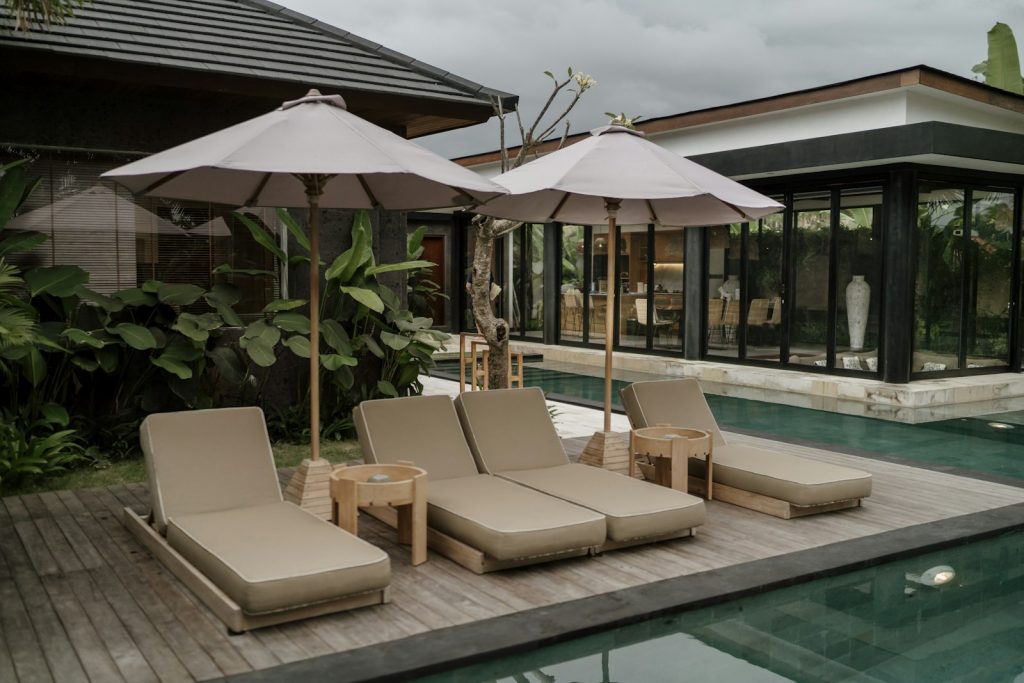
How to plan a private luxury trip to Bali is, at heart, a matching exercise: aligning your preferred rhythm, privacy level and service style with the right areas, villas or resorts, and logistics. A private luxury trip means fully tailored routes, vetted properties, and HNWI-grade ground support rather than a fixed package.
This private Bali planning guide walks through each step: where to stay, how long, realistic budgets, peak dates, villa vs resort choices, and how to layer in jets, helicopters, yachts, fast-track and close protection without turning the trip into a military operation.
—
Step 1: Decide what “private luxury” means for your trip
For some guests, luxury in Bali is a staffed villa with no neighbours in sight. For others, it is a top suite in a branded resort, kids in the kids’ club, and a driver on standby.
Align on three axes first:
1. Your rhythm
Ask yourself:
– Do you want to wake up to surf, rice fields, or jungle?
– Do you prefer walking to restaurants, or being driven?
– Are you comfortable with 90 minutes’ drive on arrival, or do you want to be at your villa within 30–40 minutes?
Typical rhythms:
– **Social + restaurants + boutiques**: South-west coast (Canggu, Seminyak, Berawa).
– **Quiet coast + clifftop sunsets**: Uluwatu / Bukit.
– **Jungle, culture, retreat**: Ubud and surroundings.
– **Remote, low-key**: north and east coasts, Nusa Lembongan, Nusa Penida, or private-leaning estates.
2. Your privacy level
– **Maximum privacy**: Standalone villas on larger plots, ideally with no shared walls, often on the Bukit, around Ubud, or in gated estates in Canggu/Seminyak.
– **Moderate privacy**: Villas inside hotel/resort compounds (shared facilities, private pool).
– **Social setting with private retreat**: Suites or villas in established 5* resorts.
3. Service expectations
At the higher end in Bali, you can expect:
– **Daily housekeeping** and **private chef or cook** in many villas.
– **Butler-style service** in top-tier villas and suites.
– **On-call driver** (car + driver 8 hours/day is a common arrangement).
– Optional **nannies**, **spa therapists**, **yoga instructors**, **fitness coaches**, and **private guides**.
Clarifying these three dimensions first avoids paying for features you will not use.
—
Step 2: Choose your areas in Bali
Most private luxury itineraries combine two or three bases: coast + jungle, or coast + clifftop, occasionally adding a small island or a remote corner of the main island.
Below is a high-level comparison of Bali’s main luxury areas as of mid‑2026.
| Area | What it’s best for | Typical transfer from DPS | Luxury nightly spend (villa/resort) last verified June 2026 |
Trade-offs |
|---|---|---|---|---|
| Seminyak / Petitenget | Beach clubs, restaurants, shopping, easy first-time base | ~30–45 minutes by car | Approx. USD 450–1,500+ per night for quality 3–6 bedroom villas; USD 500–1,500+ for 5* suites | Busier streets, more construction; less sense of “escape” |
| Canggu / Berawa | Contemporary villas, surf, cafes, longer stays | ~45–75 minutes by car | Approx. USD 500–2,500+ per night for 3–7 bedroom villas; limited high-end resorts | Traffic; can be noisy near beach clubs and main roads |
| Uluwatu / Bukit | Clifftop privacy, sunsets, surf, wedding-friendly estates | ~45–75 minutes by car | Approx. USD 800–4,000+ per night for 4–8 bedroom clifftop villas; USD 600–2,000+ for 5* suites/villas | Fewer walkable options; more driving for restaurants and shops |
| Ubud & surroundings | Jungle, rice fields, wellness, culture | ~1.5–2 hours by car | Approx. USD 400–1,800+ per night for villas; USD 500–2,500+ for top suites/villas in 5* resorts | Not a beach destination; more rain, especially Nov–Mar |
| Sanur / East coast | Calmer beach, families, easier sea access to Nusa islands | ~25–45 minutes by car | Approx. USD 350–1,200+ per night for villas; USD 400–1,200+ for resorts | Less nightlife; older building stock in places |
| Nusa Dua / Benoa | Gated resort area, golf, calmer water, corporate-style 5* | ~25–45 minutes by car | Approx. USD 400–1,800+ per night for 5* resorts & villas | Less character; more “international resort” feel than “Bali” |
| Nusa Lembongan / Nusa Penida (by boat) | Clearer water, snorkelling/diving, “island” feel | ~30–45 minutes fast boat from Sanur | Approx. USD 300–1,000+ per night for villas and boutique hotels | Boat dependency; sea conditions can affect transfers |
These are guideline ranges across quality, mid‑to‑top‑tier inventory, not “all-in” package rates, and are based on publicly observable pricing last verified June 2026. Peak dates (Christmas/New Year, some August weeks, major holidays) can sit significantly higher, and availability drives price.
—
Step 3: Decide how long to stay and how to split your time
For a true private luxury trip, **7–14 nights** is a useful range.
– **7 nights**: One or two bases. For example:
– 4 nights Seminyak / Canggu + 3 nights Ubud, or
– 4 nights Uluwatu + 3 nights Seminyak.
– **10–14 nights**: Two, sometimes three bases. Ideas:
– 4 nights Uluwatu (clifftop) + 4 nights Ubud (jungle) + 3 nights Canggu (villas + dining).
– 5 nights Seminyak (beach + dining) + 5 nights Ubud (wellness + culture).
More than three moves in two weeks is rarely helpful for guests who value privacy and calm. Each move involves packing, checking out, and driving 1–2 hours. The exception is if you are arriving or leaving by yacht or are combining Bali with other Indonesian regions by private jet or helicopter.
—
Step 4: Choose between a private villa, a resort, or a hybrid
Both villas and resorts can deliver high-end experiences, but they suit different briefs.
Private villas: pros, cons, and budgets
**Pros:**
– Full privacy for your group; no shared pools or breakfast rooms.
– Kitchen, living areas, and gardens to yourself.
– Often better value per bedroom for families and groups, particularly 3+ bedrooms.
– Staff know your preferences intimately over the stay.
**Cons:**
– Fewer on-site restaurants; more need to arrange drivers and reservations.
– Service is only as good as the particular staff and management.
– Gym, spa, and kids’ club may require driving to external facilities.
**Budget guidance (last verified June 2026):**
– Quality 3–4 bedroom villas in Seminyak, Canggu, Sanur, Ubud:
– Approx. **USD 400–1,200+ per night** depending on exact location, design, staffing and season.
– High-spec 4–6 bedroom villas (good architecture, strong teams, well-managed estates):
– Often **USD 800–2,500+ per night**.
– Clifftop estates in Uluwatu and large beachfront villas (5–8+ bedrooms):
– Often **USD 1,500–4,000+ per night**, with some ultra-luxury properties beyond that.
Rates can include varying levels of service: sometimes breakfast only; sometimes a full team with private cook, butler, housekeeping, and security. Always check what “included staff” actually means.
Luxury resorts: pros, cons, and budgets
**Pros:**
– Full resort ecosystem: spa, gym, multiple restaurants, kids’ clubs, often on the beach.
– Predictable service standards under international or well-known local brands.
– Strong concierge desks for restaurant bookings and excursions.
**Cons:**
– Less privacy at pools and shared spaces.
– High food and beverage pricing relative to local restaurants.
– Suites with private pools can approach or exceed villa rates on a per-night basis.
**Budget guidance (last verified June 2026):**
– High-quality 5* resort rooms and suites in Seminyak, Nusa Dua, Jimbaran, Sanur:
– Approx. **USD 350–1,500+ per night**, depending on category and season.
– Top-tier pool villas or signature suites in leading luxury resorts (Uluwatu, Ubud, Nusa Dua, etc.):
– Often **USD 800–2,500+ per night**, rising on peak dates.
Hybrid: villa + resort
Many HNWI guests prefer:
– **Villa first** to decompress in privacy, with in-villa spa and meals.
– **Resort second** for easy beach access, full-service spa, and a lighter planning burden once acclimatised.
Or the reverse if arriving late and wanting a simple overnight at a resort before moving to a more remote villa.
—
Step 5: Choose the right season — and be honest about trade-offs
Bali is a year-round destination, but quality of light, rainfall, surf, and crowds all vary.
Broad patterns (public-climate-data level):
– **Dryer months**: Typically **May to September**, with July–August the traditional high season.
– **Wetter months**: Roughly **November to March**, with heavier rain possible and more humidity.
– **Shoulder months**: April, May, late September, October can offer a balance of fewer crowds and pleasant conditions.
Trade-offs by period:
– **Christmas / New Year**:
– Villas and resorts often require longer stays (7+ nights).
– Pricing can run at the upper end of ranges; availability is the main constraint.
– Expect traffic, fully booked restaurants, and earlier planning for anything time-sensitive.
– **July / August**:
– Popular with families; villa availability shrinks early in preferred areas.
– Weather typically pleasant for coasts and outdoor days.
– **Shoulder periods (May–June, late Sept–Oct)**:
– Often the best mix of value and experience for private luxury.
– More choice at top properties and easier last-minute restaurant bookings.
– **Wet-season months (approx. Nov–Mar)**:
– Good value and fewer crowds in many places.
– More rain and cloud; Ubud and central areas can feel cooler and damp at times.
– Sea conditions can affect small-boat trips and some water activities.
No operator can guarantee weather or sea conditions on specific dates, so plan for flexibility rather than fixed daily commitments for outdoor activities.
—
Step 6: Budgeting for a private luxury Bali trip
Budgets depend on your group size, time of year, and expectations for dining, activities, and transport. As a practical baseline for **mid‑2026**, for a **family or group of 4–8** in private-villa or suite-level comfort:
– **Accommodation**:
– Realistically **USD 600–3,000+ per night**, depending on area, quality, number of bedrooms, and dates.
– **Daily spend (food, drivers, spa, activities)**:
– Often **USD 150–500+ per person per day**, again depending heavily on where you eat and how many private services you engage (spa, yoga, guides).
– **Premium logistics add-ons** (private fast boats, helicopters, select yacht days, security drivers):
– Can start from the low **four figures (USD)** per segment or day and escalate with distance, specification and vessel size.
These are directional figures grounded in current public and partner rate ranges (last verified June 2026). We refine them to your brief rather than “standard packages”.
If you would like a tailored sense of what your own trip might cost, you can plan your trip with us; we typically refine an initial budget together via email and WhatsApp before we ever place a hold on a villa or suite.
—
Step 7: Logistics for HNWI travellers — jets, helicopters, yachts, and more
The key to private luxury logistics is integration. Each component (flight, airport arrival, transfer, villa or resort, day trips, departure) should feel coordinated, not piecemeal.
Private jet and commercial-first-class arrivals
– **Private jet**:
– Bali (Ngurah Rai International, DPS) can accommodate private jets with prior arrangements, subject to slot availability and regulations.
– Typical pattern: regional private jet into DPS, then ground transfer to your first base.
– Handling agents and ground services vary; the value is in experienced operators who coordinate permits, customs, and crew logistics well in advance.
– **Commercial first/business**:
– Most premium travellers still arrive on international airlines, then upgrade the on-ground experience with **fast-track and private transfers**.
Fast-track, VIP meet-and-greet, and immigration support
For HNWI guests, the objective is to shorten exposed time in queues and public areas:
– **Arrival meet-and-greet**:
– Staff meeting you airside or at the terminal entrance, escorting through visa/immigration and baggage claim, then to your vehicle.
– **Departure support**:
– Similar escort through check-in, immigration, and to the lounge or gate, often with pre-arranged porterage.
These services differ across terminal configurations and regulatory updates, so we brief guests before arrival on precisely what to expect.
Helicopter transfers and scenic flights
Helicopters in Bali are used both for transfers and for sightseeing (weather and permitting conditions dependent). Typical use-cases:
– Reducing a 2–3 hour drive to a short flight for:
– Certain remote villas or estates.
– Private-jet guests keen to avoid long car transfers on arrival.
– Scenic flights:
– Volcano and coastline flights, often timed outside the hottest midday hours.
Costs depend on routing, type of aircraft, and flight duration, and sit in the higher three to low four-figure USD range per flight segment as of mid‑2026, with capacity limits on passengers and luggage. Safety and operator vetting matter more than shaving a small percentage off the rate.
Yachts, fast boats, and water access
There is a wide spectrum of vessels available to charter around Bali and the Nusa islands:
– **Fast boats**: Shared or privately chartered fast boats (typically 30–45 minutes) are a common way to reach Nusa Lembongan or Nusa Penida. Private charters allow for more flexible timings and privacy.
– **Day-charter boats and yachts**:
– Ranging from simple speedboats to motor yachts with cabins, suitable for day trips or short overnight itineraries around the Nusa islands or to quieter bays.
Costs are highly variable depending on length, specification, and route, with day charters typically in the higher hundreds to several thousand USD as of June 2026. Sea conditions can change quickly; no reputable operator will guarantee specific wildlife sightings or perfect snorkelling visibility.
Security drivers and close protection
For some guests, discretion and safety are as important as comfort:
– **Security drivers**:
– Trained drivers familiar with secure routing, lower-profile behaviour, and coordination with local security teams.
– **Close protection officers (CPOs)**:
– Plain-clothes professionals accompanying the principal or family, coordinated with villa/resort security procedures and any local requirements.
The aim is low-visibility, culturally respectful security that complements — not disrupts — the hosting experience.
—
Step 8: Day-to-day planning — how much to schedule
Many guests over-schedule their first Bali trip. True luxury here often means building in white space.
Activities and experiences
Typical options include:
– **Culture & nature**: Temples, rice terraces, local markets, soft hikes, cycling.
– **Water & adventure**: Surf lessons, diving/snorkelling, rafting, canyoning.
– **Wellness & slow time**: In-villa spa, yoga, meditation, sound healing, cooking classes.
– **Dining & nightlife**: High-end restaurants, chef’s tables, beach clubs, low-key warungs.
For a 10-night trip, a gentle planning structure might look like:
– 3–5 “anchored” days with scheduled experiences (half-days or full days).
– 3–4 lightly planned days (spa bookings or gentle restaurant anchors only).
– 1–2 fully open days per base to let jet lag, weather, and mood dictate the pace.
Reservations and lead times
By mid‑2026, many of Bali’s better restaurants, beach clubs, and spas expect reservations, especially in:
– Seminyak / Petitenget
– Canggu / Berawa
– Uluwatu beach clubs
– Leading Ubud restaurants
For peak periods (Christmas/New Year, key August weeks), some venues book out weeks in advance for prime dinner slots and cabanas. Your villa or resort team can assist, but an independent curator helps ensure the reservations align with your broader itinerary rather than being made in isolation.
—
Step 9: Practicalities — currency, tipping, etiquette, and connectivity
Money and payments
– **Currency**: Indonesian Rupiah (IDR).
– **Cards**: Widely accepted at quality restaurants, resorts, and many villas; smaller shops and local eateries often remain cash-focused.
– **Tipping**:
– Many venues add a **service charge** to the bill; additional tips are at your discretion.
– For villa staff, a pooled tip at the end of the stay is customary and appreciated. The exact amount varies by group size and length of stay; we typically advise case by case, aligning with local norms and your level of service use.
Respectful conduct
Balinese culture is deeply spiritual and community-oriented. A few principles:
– Dress modestly for temple visits (shoulders and knees covered; sarong and sash where required).
– Follow villa and resort guidance on ceremonies, offerings, and local processions.
– Be sensitive with photography around religious events and private compounds.
– Noise: Many luxury villas are embedded in villages; high-volume music late at night impacts neighbours. Greater privacy is sometimes about choosing a more isolated location rather than testing local noise limits.
Connectivity
– High-end villas and resorts generally have Wi‑Fi, but speeds and stability can vary, especially in more remote areas.
– Many guests opt for:
– Airport or eSIM data packages for redundancy, or
– Local SIMs for staff phones (drivers, coordinators) to ensure you can reach them easily.
WhatsApp is widely used by drivers, villa staff, and concierges; most of our active planning and day-to-day coordination runs through it unless guests prefer another channel.
—
Step 10: Decide who will orchestrate it — DIY vs curated
You can absolutely assemble a luxury Bali trip yourself: search villas, book resort suites, piece together drivers, restaurant reservations, and activities.
For HNWI-level expectations, the question becomes where your time and attention are best spent, and how much you value:
– Pre-vetted villas and resorts that genuinely match your brief, rather than simply ranking highly online.
– Honest trade-offs on areas and properties instead of sales-driven narratives.
– Integrated logistics (airport → villa → second base → day trips → departure).
– Single-point-of-contact support for last-minute changes, from restaurant moves to security-driver adjustments.
As a curation-focused company, Bali Private Luxury designs trips by starting with the brief, then shortlisting a few options per segment with precise pros and cons. No one can pay to change what we publish; if you proceed with our partner they may pay us a referral fee at no extra cost to you.
If you’re ready to move from ideas to a concrete plan, you can plan your trip with us — typically we begin with a short form or email, then refine via WhatsApp until your itinerary, villa or resort choices, and logistics feel exactly right.
—
FAQs: Private luxury trip planning for Bali
How far in advance should I plan a private luxury trip to Bali?
For peak dates (Christmas/New Year, August, Easter), 9–12 months ahead gives the best choice of top villas and suites. For shoulder seasons and non-school-holiday periods, 4–6 months is usually sufficient for high-end options, though very specific clifftop or beachfront villas can book out earlier.
Is a private villa or a resort better for a first luxury trip to Bali?
If you value privacy and are travelling as a family or group, a well-run villa usually offers more space and flexibility for the budget. If you prefer a contained environment with multiple restaurants, spa, and kids’ club on-site, a 5* resort or a hybrid (villa plus resort) can work well. Many first-timers start in a resort for 2–3 nights, then move into a villa once acclimatised.
How much does a one-week private luxury Bali trip typically cost?
For a family or group of 4–8 staying in a quality private villa or high-end suites, total spend for 7 nights often falls in the low- to mid-five-figure USD range by mid‑2026. That includes accommodation (commonly USD 600–3,000+ per night depending on area and spec) plus daily spend on food, drivers, spa and activities (often USD 150–500+ per person per day). Premium logistics like helicopters, yachts, and security are additional.
Can you arrange private security and low-profile logistics?
Yes. It is possible to integrate security drivers, close protection officers, and low-visibility routing into an otherwise relaxed itinerary. The design principle is minimal intrusion: matching the security posture to your risk profile while maintaining cultural respect and guest comfort.
Do I need travel insurance for a luxury trip to Bali?
Yes. Even with private logistics and high-end properties, comprehensive travel insurance remains essential for medical coverage, evacuation, trip delays, and cancellations. Policies and regulations change, so we recommend guests confirm coverage details with their chosen provider before committing to non-refundable arrangements.